Smartphone Technology 2026: AI Features, New Innovations & Future Trends

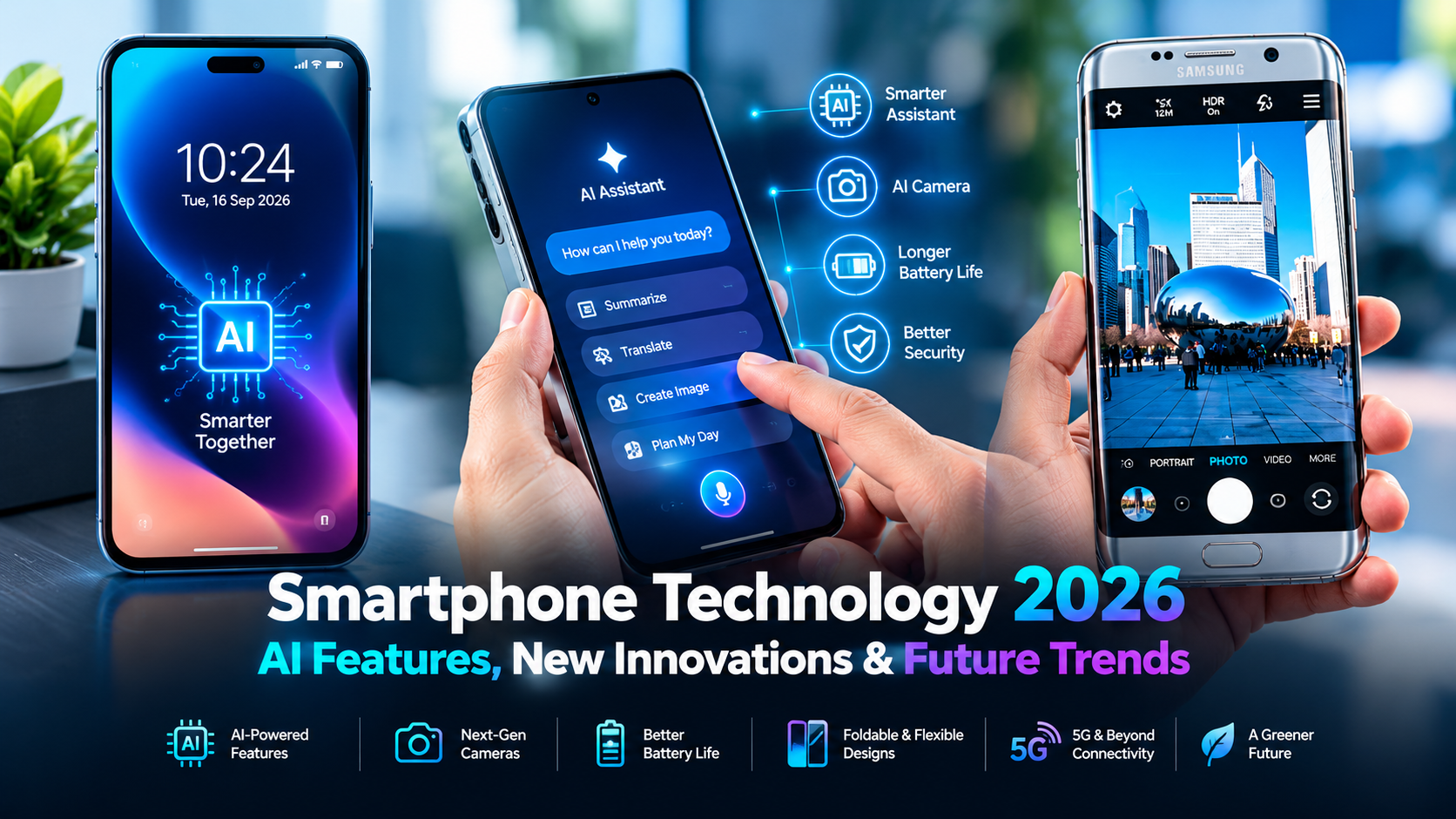
Smartphones are no longer just devices for calling, messaging, browsing, and social media. In 2026, smartphone technology is moving toward a more intelligent and connected experience. Artificial intelligence is becoming part of everyday mobile tasks, while improvements in processors, cameras, displays, batteries, connectivity, and security are changing what users can expect from a modern phone.
The biggest change is not necessarily the way smartphones look. Instead, much of the innovation is happening inside the device. Modern smartphones are increasingly capable of understanding images, text, voice, and user commands. Some devices can perform AI tasks directly on the phone, reducing the need to send every request to a cloud server. Android’s AICore, for example, enables supported devices to run certain generative AI models locally.
At the same time, manufacturers are experimenting with foldable designs, stronger mobile processors, improved cameras, faster charging, privacy-focused displays, and smarter software.
So, what does smartphone technology in 2026 actually look like? Let’s explore the major developments shaping today’s mobile experience.
What is changing in smartphone technology in 2026
The smartphone industry is moving from simple hardware upgrades toward a combination of AI, performance, personalization, connectivity, and security.
Previous smartphone generations often focused on increasing camera megapixels, processor speeds, screen refresh rates, or battery capacity. Those improvements are still important, but software intelligence is becoming a much bigger part of the experience.
For example, modern AI systems can help users summarize information, improve photos, translate conversations, search visually, organize information, and assist with everyday tasks. Google has also been expanding Gemini-based features on Android, including tools designed to handle more complex multi-step activities.
This means the smartphone of 2026 is increasingly designed to understand what the user wants rather than simply waiting for individual commands.
1. AI is becoming a core smartphone feature
Artificial intelligence is one of the biggest smartphone trends in 2026.
Instead of treating AI as a separate application, smartphone manufacturers are integrating it into cameras, messaging, search, notes, translation, voice assistants, and other everyday functions.
On compatible Android devices, Gemini can assist with tasks that require multiple steps. Samsung’s Galaxy AI ecosystem also includes tools for writing assistance, summarization, image editing, search, and other daily activities.
This shift is important because users may not always need to open a dedicated AI application. AI can work quietly in the background and appear exactly where it is useful.
For example, a user might:
- Summarize a long document
- Rewrite a message
- Translate text
- Search for something visible on the screen
- Improve an image
- Organize notes
- Identify objects in a photograph
- Get help with a complicated task
The goal is to make smartphones more useful without making them more difficult to operate.
2.On device AI is growing
One of the most interesting developments is on-device AI.
Traditionally, many AI services depend on remote servers. Your phone sends information to a cloud service, the server processes it, and the result comes back to your device.
On-device AI takes a different approach. Some AI processing can happen directly on the smartphone using its processor and neural processing hardware.
Android’s AI Core is designed to run certain generative AI models locally on supported Android devices. Google says this approach can provide fast responses and allow some AI functions to work without an internet connection.
There are several potential advantages:
- Faster response for supported tasks
- Better privacy for certain processing
- Reduced dependence on an internet connection
- More efficient AI experiences
- Greater control over personal information
However, not every AI feature works entirely on the device. Some features still depend on cloud processing, and availability varies by smartphone, software version, country, and language. Samsung also distinguishes between on-device and cloud-based Galaxy AI functions.
3. AI powered smartphone cameras
Smartphone photography continues to evolve through AI.
Modern camera systems can use computational photography to improve images in challenging conditions. Instead of depending only on physical camera hardware, smartphones can process captured information using sophisticated software.
AI can assist with:
- Portrait effects
- Night photography
- Object recognition
- Photo enhancement
- Image editing
- Subject detection
- Video stabilization
- Background adjustments
This does not mean traditional camera hardware is becoming irrelevant. Sensors, lenses, image stabilization, and processing power still matter. The major change is that hardware and software are increasingly working together.
As a result, users may get better-looking images without needing professional photography knowledge.
4. Smarter visual search
Searching with a smartphone is becoming more visual.
Tools such as Google’s Circle to Search allow users to search information based on content appearing on their screen. Google has also expanded visual search capabilities, including the ability to recognize multiple objects in an image on compatible devices.
Imagine seeing a room design online and wanting to identify several objects within it. Instead of describing every item manually, AI-assisted visual search can help identify or search for multiple elements.
This creates a more natural relationship between users and information.
The search process is gradually moving from:
Type → Search → Read
toward:
See → Select → Understand
That is a major change in mobile search behavior.
5. More powerful mobile processors
AI requires computing power, so smartphone processors are becoming increasingly important.
Modern flagship chips are being designed not only for traditional CPU and GPU performance but also for AI workloads. Neural processing units, or NPUs, are increasingly used to handle AI-related tasks efficiently.
For example, MediaTek’s Dimensity 9600 Pro, announced in September 2026, uses a 2nm manufacturing process and includes an NPU designed to improve on-device generative AI performance compared with its predecessor.
This shows how smartphone processors are evolving beyond traditional performance measurements.
A future phone may be judged not only by:
How fast is it?
but also by:
how intelligently can it process information?
6. Battery technology remains a major focus
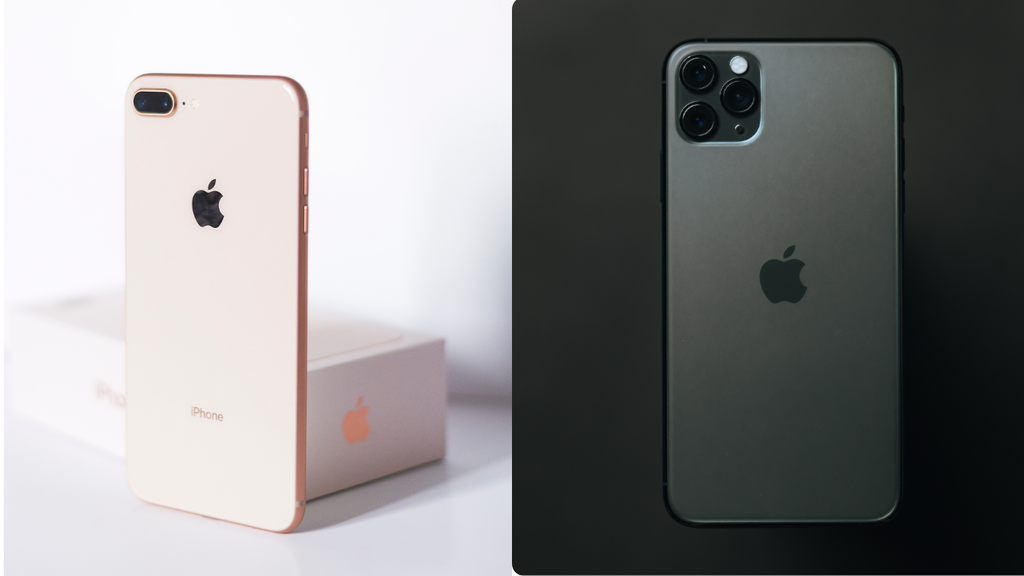
Battery life continues to be one of the most important factors when buying a smartphone.
Powerful processors, high-refresh-rate displays, cameras, 5G connectivity, and AI features can all increase energy demands. Therefore, manufacturers are working on better battery materials, charging systems, thermal management, and power efficiency.
Silicon-carbon battery technology is one example of the direction the industry is exploring. Some 2026 smartphones are combining large-capacity batteries with improved efficiency and fast charging.
Better battery technology could allow phones to remain powerful without requiring users to carry large external battery packs. But battery capacity alone does not determine real-world battery life. Software optimization, processor efficiency, display settings, network conditions, and user behavior also play important roles.
7.Faster charging and better thermal management
Fast charging has become a common feature in many modern smartphones, but charging speed creates another challenge: heat. Manufacturers therefore need to improve both charging technology and thermal management.
Modern flagship phones can use larger vapor chambers and other cooling systems to help manage heat during gaming, AI workloads, video recording, and intensive multitasking.
Samsung, for example, highlighted redesigned thermal architecture in the Galaxy S26 Ultra alongside improvements aimed at sustained performance. Better cooling can help a smartphone maintain performance for longer periods instead of reducing performance because of excessive heat.
8.Foldable smartphones are becoming more advanced
Foldable phones remain one of the most visible hardware innovations in the smartphone industry.
Instead of using a traditional rectangular screen, foldable devices can provide a larger display while remaining relatively compact when closed.
The technology is developing in several directions:
- Book-style foldable
- Flip-style foldable
- Larger multitasking screens
- Thinner folding designs
- Improved hinge mechanisms
- Reduced screen creasing
- Better durability
Foldable are particularly useful for people who want a larger display for multitasking but do not want to carry a traditional tablet.
However, factors such as price, durability, weight, and software optimization still influence whether a foldable phone is practical for an individual user.
9. Displays are becoming more intelligent
Smartphone displays are also evolving.
High refresh rates, improved brightness, better outdoor visibility, adaptive refresh technology, and enhanced eye-comfort features are becoming increasingly common.
Some manufacturers are also experimenting with privacy-focused display technology.
Samsung’s Galaxy S26 Ultra, for example, introduced a Privacy Display designed to reduce side viewing of information while maintaining visibility for the user.
This type of technology could be particularly useful when using a smartphone in public places such as buses, trains, airports, offices, or cafés.
10. 5G and faster mobile connectivity
Connectivity remains another major part of smartphone innovation.
5G has already changed mobile internet by improving speed and reducing latency in supported areas. As network infrastructure develops, smartphones are expected to make better use of faster and more reliable connections.
Faster connectivity can benefit:
- Video streaming
- Cloud gaming
- Video calls
- Large file transfers
- Online learning
- Remote work
- Cloud-based applications
- Real-time AI services
However, actual network performance depends on the carrier, location, network congestion, device compatibility, and available spectrum. Therefore, buying a phone with 5G support does not automatically guarantee the same 5G experience everywhere.
11. Smartphone security is becoming smarter
AI is now being used to help detect suspicious activity and potential scams.
Google announced an on-device Scam Detection feature for the Samsung Galaxy S26 series that can analyze calls and provide an alert when a potential scam is detected, with the feature designed to process the analysis on the device.
Meanwhile, smartphone manufacturers are adding stronger privacy controls, biometric authentication, app permissions, secure processing, and other protections.
The future of smartphone security will likely combine traditional security systems with AI-assisted threat detection.
12. Smartphones are becoming more personalized
Another major future smartphone trend is personalization.
AI can help phones understand preferences, frequently used applications, communication habits, and common tasks.
The idea is not simply to make a phone respond to commands. Instead, smartphones are gradually becoming more proactive.
For example, an intelligent phone might help organize information, suggest useful actions, or surface relevant content at the right moment.
Google describes newer Android experiences as becoming more proactive, with AI helping automate complex tasks and organize information.
However, personalization also creates an important question:
How much personal information should a smartphone understand?
This makes privacy controls and user choice increasingly important.
13. Gaming performance is still improving
Mobile gaming continues to influence smartphone hardware.
Gamers want:
- Powerful processors
- Strong GPUs
- High refresh-rate displays
- Fast touch response
- Better cooling
- Long battery life
- Stable performance
AI may also contribute to gaming through image processing, performance optimization, and other software features.
Better thermal systems are especially important because gaming can place heavy loads on the processor for extended periods.
As mobile games become more sophisticated, smartphones are increasingly being designed to provide console-like experiences in a portable format.
14.Smartphones are becoming more connected to other devices
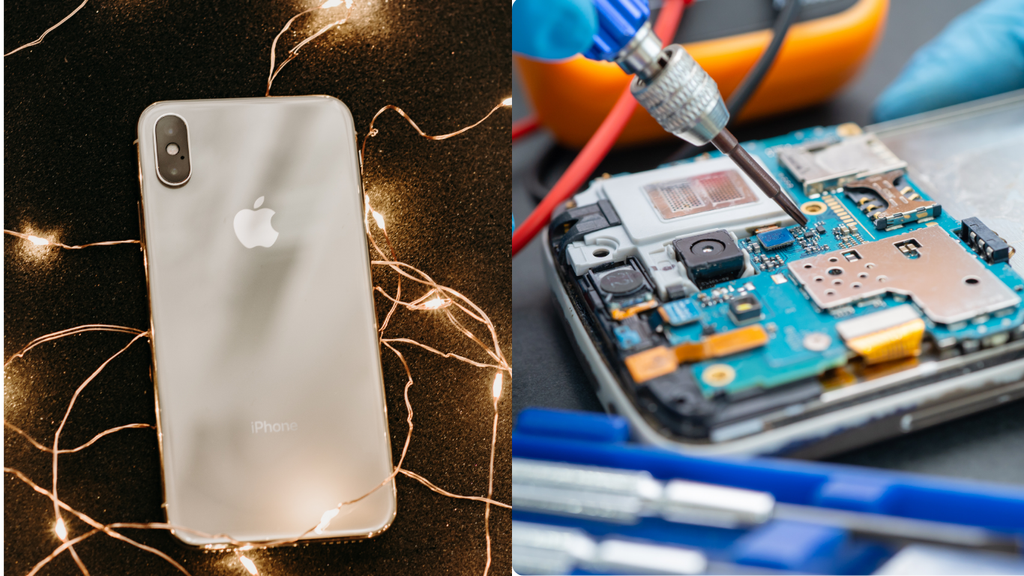
The smartphone is no longer an isolated device.
It increasingly acts as a central control point for:
- Smartwatches
- Wireless earbuds
- Tablets
- Laptops
- Smart TVs
- Smart home devices
- Cars
This connected ecosystem can make it easier to move information between devices.
For example, Google is expanding connections between Android phones and other devices, while manufacturers such as Samsung are building ecosystems that connect smartphones with watches, tablets, earbuds, and other products.
This means the future smartphone may be less about one device and more about how multiple devices work together.
15.What could smartphones look like in the future?
The next stage of smartphone technology may focus less on adding individual features and more on making the entire experience intelligent.
Future smartphones could potentially become better at:
- Understanding natural language
- Completing multi-step tasks
- Processing information locally
- Predicting useful actions
- Improving photography automatically
- Translating conversations in real time
- Connecting seamlessly with other devices
- Protecting users from digital threats
The physical design may also continue changing through foldable, roll able, or other flexible display concepts.
However, not every experimental technology will become mainstream. Cost, durability, battery requirements, manufacturing complexity, and consumer demand will determine which innovations survive.
How to choose a smartphone in 2026
With so many new features available, buyers should not choose a phone based only on advertising.
Consider these factors before purchasing:
1.processor
Choose a processor that can handle your everyday workload, gaming, photography, and AI features.
2.Battery
Look beyond battery capacity. Charging speed, efficiency, and real-world battery performance also matter.
3.Camera
Do not focus only on megapixels. Sensor quality, stabilization, image processing, and camera software can have a major impact.
4.Software support
A phone that receives regular software and security updates can remain useful for longer.
5. AI features
Check which AI functions are actually available on the specific model. Features can vary by device, language, and software version.
6.Privacy
Understand whether important AI features process information on the device or through cloud services.
7.Display
Consider brightness, refresh rate, resolution, size, and viewing comfort.
8.Your actual needs
A flagship smartphone is not necessary for everyone. Students, content creators, gamers, photographers, and business users may have very different requirements.
Final thoughts on smartphone technology 2026
Smartphone technology in 2026 is moving beyond simple hardware upgrades. Artificial intelligence, on-device processing, advanced cameras, powerful processors, improved batteries, foldable displays, stronger security, and faster connectivity are combining to create a new generation of mobile devices.
The most important development may be the growing role of AI. Smartphones are becoming better at understanding what users see, hear, write, and ask. At the same time, on-device AI is creating new possibilities for speed, privacy, and offline functionality.
But more technology does not automatically mean a better phone for every person. The right choice depends on how someone uses their device, what features they need, how much they want to spend, and how much they value privacy and long-term software support.
As smartphone technology continues to develop, the biggest shift may be simple: the phone is gradually becoming less like a passive tool and more like an intelligent digital assistant.